Classroom Newsletter Ideas: How to Improve Parent Communication
Parent communication for teachers doesn’t have to mean another app, endless emails, or hours of extra work. A simple classroom newsletter for teachers can keep families informed, celebrate students, share important dates, and strengthen school-to-home communication throughout the year.
With everything available through apps and cell phones, I have actually found that a paper newsletter has become even more meaningful. Creating a monthly classroom newsletter for your upper elementary or middle school classroom can benefit you, your students, and their parents—and once you have a template, it can take as little as 15 minutes a month to update. You can do this!
Why Classroom Newsletters Are Still an Effective Parent Communication Tool
Antiquated or effective???
I love classroom newsletters! I know what you are thinking–it sounds antiquated! However, I assure you that parents and students love class newsletters too. A newsletter is a way to inform the masses. Of all the parent communication strategies for teachers I have tried, a simple newsletter continues to be one of the easiest ways to keep students and families informed.
Class Newsletters are…
- Appealing to the eye, you draw in your audience, and they pay attention
- A simple conduit to disseminate information, dates, and upcoming events
- An amazing way to celebrate students
A newsletter can do all of these things, and all on one page. By printing your amazing newsletter, the information that you need to relay will grace many a refrigerator and create talking points at the dinner table. I have seen newsletters make an impact from kindergarten all the way to college students, and once I created my template, the newsletter was easy to update each month in about fifteen minutes. Having a tangible item, something that students need to deliver, something that can be physically hung, and can be referred back to with no phone or computer needed proved to be priceless to students and parents. Although this is a more “traditional” route to communication, I assure you it is extremely effective.
Why a Monthly Classroom Newsletter Works for Parent Communication
Does anyone even read it? I started creating a monthly classroom newsletter for my upper elementary classroom, and I thought that no one read it, and was honestly about to give it up. Wow, was I wrong! One month, I was late sending home my newsletter, and the emails flooded in asking if the newsletter had been sent home. I was pleasantly surprised; this piece of paper that I sent home once a month was making a difference. I had created a template and simply changed what was in each box each month (which took all of fifteen minutes). I was sure to take special care to personalize the contents of the newsletter each month and tried to convey as much information as possible without it looking cluttered or crazy. This newsletter created a way for me to connect with parents, and it in turn allowed parents to better support both me and their students. This communication also helped to give power to parents and students. They were in the loop regarding the happenings at school and especially in the classroom; this information helped to give ownership over their learning. It is so important for students to take responsibility for what is happening in their academic life. We must make learning goals tangible for them, which in turn makes them real. As silly as this sounds, I saw a class newsletter do this for my students and parents. The newsletter helped me out, too! I wasn’t having to constantly remind students of dates, upcoming tests and events, or what we were academically focusing on in class–it was on them. The newsletter took away the burden of constantly “reminding” my students; it was now their responsibility. The information had been shared, and it was their job to remember and act upon that information. Parents mentioned it to other teachers and even the administration; they were thankful for the transparency of my classroom. I could not believe the impact of this piece of paper!
How to Create a Classroom Newsletter for Your Students and Families
One of my biggest classroom newsletter tips is to choose a creation platform you already know how to use. Your newsletter should make parent communication easier—not become another time-consuming teacher task. This is very important; you must choose a platform that is easy for you to navigate. Remember, this is supposed to be a quick update each month; you don’t want to spend hours figuring out how to edit on a new platform. In all honesty, I don’t have the time to master those programs. I use either Google Slides or PowerPoint. Just go to the page setup and change the page size to 8.5 x 11; this will allow you to easily print on a normal-sized piece of copy paper. Once your page size is set, you can start creating. You can add a slide for every month, and you can use the same themes and clip art each month, the following year too (even more time saved). Using one of these presentation programs gives you the freedom to place text boxes and whatever images you would like wherever you want. Many teachers utilize programs like Canva, and if this is your happy place, go for it! The important thing is to choose software that doesn’t overwhelm you; the newsletter should make your job easier, not more stressful. Once you decide on your template, it will be easy to plug in new information each month and save it as a PDF (easy to print and email). Then, all you need to do is make copies, send them home, and you are set!
Classroom Newsletter Ideas: What to Include in Your Newsletter
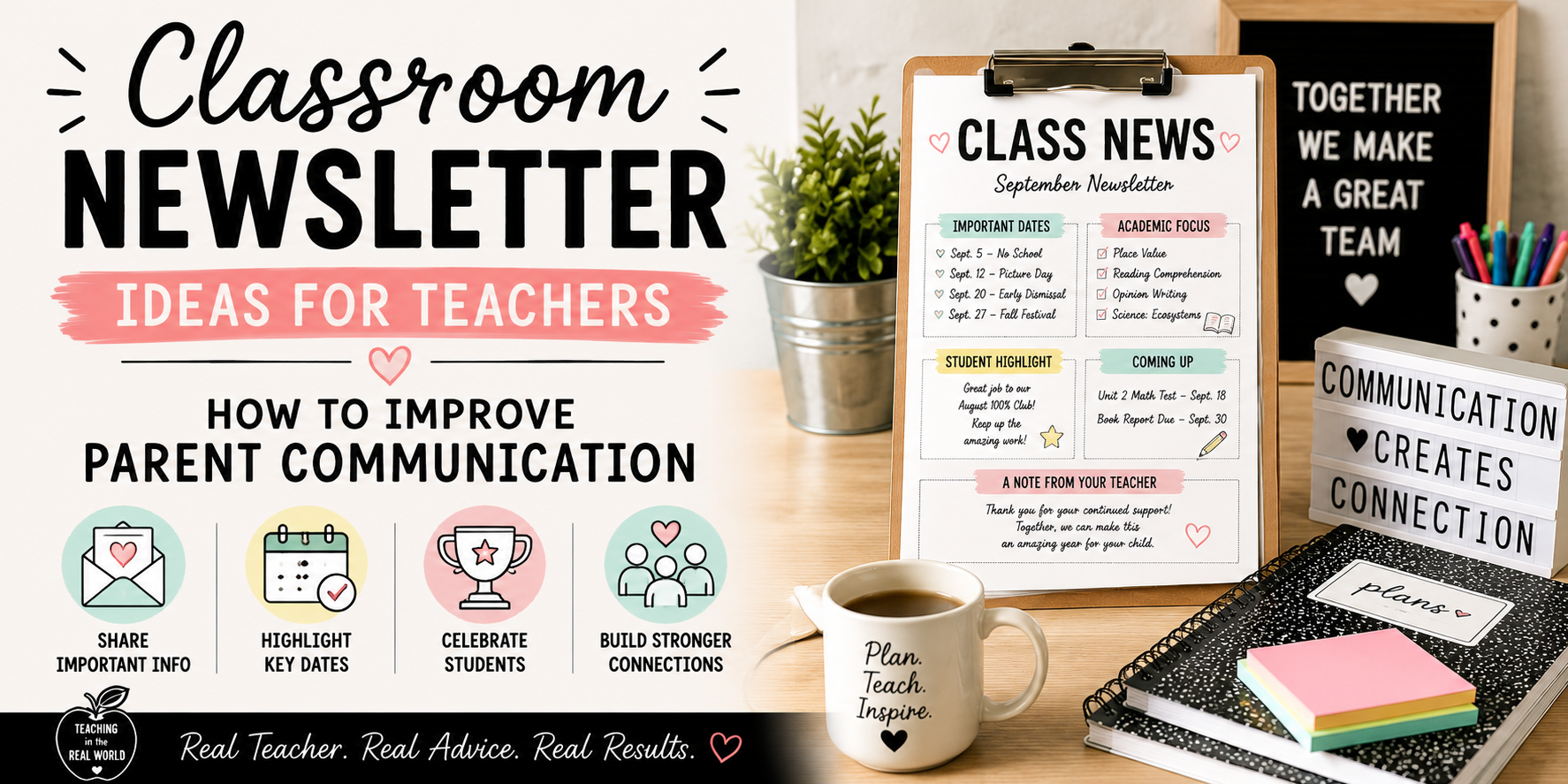
Create a functional layout. You want your newsletter to reflect you, but you also want to create a class brand. I know the word brand can hold a lot of weight these days, but don’t overthink it! Let your classroom newsletter for parents represent who you are as a teacher and all of the amazing things you are doing in your classroom. Obviously, a kindergarten newsletter will look very different from a seventh-grade newsletter, but just remember that the quality of the information on both should be the same. Choose fonts, colors, and images that work for you. Be careful not to overclutter your newsletter page; keep it simple and to the point. You will, of course, have important dates and upcoming events, but this is an opportunity for you to relay academic topics as well. Have an academic focus; that is what you want your students and their families to practice or be aware of for the month. Keep a monthly theme by changing colors, images, and fonts based on the time of year, which will add a fun flair (and even though they won’t admit it, your older students secretly love this). The sections of your newsletter should remain in the same place on the page for the entire school year. This ensures students and parents can easily find the information they are looking for, and familiarity with the layout helps readers not miss any vital information.
Here are some of the sections I include in my newsletter:
- Important Dates
- School Events, Games, and Holidays
- Tests/Quizzes
- Major Projects
- When Grades Close
- Student Successes and Celebrations (check district policy)
- 100% Club (student who received a 100% on tests or quizzes)
- Student(s) of the Month-If your district allows, I suggest recognizing a few students each month (depending on your class size). Yes, even in the
- Student Birthdays
- Any Type of Student Shout Out
- Topics or Standards Covered That Month
- State Standards (Math, Reading, Writing, Social Studies, Science)
- Writing Goals
- Math Facts
- Vocabulary Words/Spelling Words
- Something Fun–A Reflection of Who You Are (I would choose only one)
- Inspirational Quote
- Math Puzzle/Word Problem
- Sudoku Puzzle
- Word Scramble
- Book Suggestions
Don’t want to create your newsletter from scratch?
I’ve created the same simple, functional classroom newsletter system I use to keep students and families informed—without spending hours designing it each month.
The class newsletter is another way for you to connect with your students and strengthen those lines of communication with parents. Let a bit of your personality shine through all while keeping everyone on the same page and up to date with information. Your newsletter is a celebration of your students and the learning that occurs within your classroom.
How to Use Your Classroom Newsletter for School-to-Home Communication
Timing is key! Be sure to send your class newsletter home at the same time each month, and try to send it in the middle of the week (avoid Fridays; most students won’t see it until the following week if you send it home on Friday). Whether you are sending a digital or hard copy of the newsletter home, always have students write it down in their student agendas/planners; that way, parents know to check for it. If your school doesn’t utilize student agendas/planners, communicate via whatever type of parent communication app, program, or outreach that is available to you. The main thing is you want parents to know that the newsletter is coming. Another tip is to document this communication with parents, and document when you send the newsletter home. This helps to cover you if parents say they never got the newsletter, or if your school is required to document parent communication. Letting all parties know that the newsletter went home is a great way to ensure that the information you communicated is received, which will make your life easier! Be sure to hang a copy of your newsletter in your classroom as well (towards the front, near your posted objective), so that your administrator or anyone visiting your classroom can see what is going on for that month. Another great option is to send a digital copy in addition to your physical copy. This is an easy and effective way to document communication with your parents, and it is a great backup if students are absent or something happens to the paper copy. Either way, parents will be grateful to have the communication from you, and will appreciate being in the loop.
The benefits of a newsletter are huge! Although you will need to put in a little effort in the beginning to establish your template and design, the rest of the year will simply involve filling in new information–it is worth the time up front! Your students, their parents, and the administration will love your clear communication, and you will love the freedom of not having to constantly remind your class about important upcoming dates.